Featured Post

2026 Quality Over Quantity: Strategic Grocery List

You Might Like

Showing posts with label Lean Muscle Workout. Show all posts

Saturday, January 3, 2026

Unlocking Your Strength: The 3-3-3 Rule for Workout Domination

Unlocking Your Strength: The 3-3-3 Rule for Workout Domination


Meta Description: Discover the 3-3-3 rule: 3 exercises, 3 sets, 3 reps for maximizing strength and muscle growth with minimal time. Learn how this powerful training method can transform your physique and fitness.


3-3-3 rule


Are You Stuck in a Workout Rut?


Do you ever feel like you’re putting in the effort at the gym, but your progress has stalled? Are you spending hours on end, only to see minimal gains in strength or muscle? Perhaps you're constantly battling fatigue, or maybe you're just looking for a more efficient way to get stronger without living in the weight room. 


If you've nodded along to any of these, you're not alone. Many fitness enthusiasts, from busy professionals to seasoned lifters, find themselves in a similar predicament. The good news? There's a powerful, straightforward, and incredibly effective training principle that could be the game-changer you've been searching for: the 3-3-3 rule.


This isn't another fleeting fitness fad. The 3-3-3 rule is a strategic approach to strength training designed to maximize your output, stimulate significant muscle growth, and help you break through plateaus with surprising efficiency. It’s for those who are serious about getting stronger, building lean muscle, and doing it intelligently, without the endless hours of grinding.


Imagine achieving more in less time, feeling invigorated after your workouts, and witnessing tangible results – that's the promise of the 3-3-3 rule. Get ready to transform your training, your body, and your confidence.


What Exactly is the 3-3-3 Rule?


At its core, the 3-3-3 rule is a principle of minimalist-effective training, focusing on quality over quantity. It breaks down into three simple components:


  1. 3 Exercises: Select three fundamental, compound exercises for your workout.

  2. 3 Sets: Perform three working sets for each of those exercises.

  3. 3 Reps: Aim for three repetitions per set, typically with a heavy weight that challenges you significantly.


This might sound deceptively simple, but the power lies in its deliberate focus on heavy lifting and foundational movements. It’s not about exhausting every muscle fiber with endless exercises and reps; it's about stimulating maximal strength adaptation and muscle fiber recruitment with precision.


Why the 3-3-3 Rule is Your Strength-Building Secret Weapon


The beauty of the 3-3-3 rule lies in its ability to address many of the common pain points and concerns faced by individuals striving for strength and muscle.


Overcoming Plateaus and Stagnation

One of the biggest frustrations in strength training is hitting a plateau. You’ve been lifting the same weights for weeks, maybe even months, and progress seems non-existent. The 3-3-3 rule forces you to lift heavier. By focusing on very low reps (3 per set), you're able to handle loads that would be impossible for higher rep schemes. This heavy stimulus is crucial for breaking through strength barriers. Your body is forced to adapt to the new, greater demand, leading to significant strength gains.


Maximizing Time Efficiency

For many, time is a precious commodity. Juggling work, family, and other commitments often means gym time is limited. The 3-3-3 rule is a game-changer here. With only three exercises and a low number of sets and reps, your workouts can be incredibly concise, often completed in 30-45 minutes (including warm-up). This efficiency means you can consistently hit the gym without sacrificing other important aspects of your life. No more feeling guilty about short workouts – you’re getting maximum impact in minimum time.


Focusing on Foundational Strength and Muscle Growth

The rule emphasizes compound movements – exercises that involve multiple joints and muscle groups working together, such as squats, deadlifts, bench presses, and overhead presses. These are the "biggest bang for your buck" exercises for building overall strength and muscle mass. By dedicating your limited exercises to these movements, you ensure a strong, functional, and well-developed physique.


Reducing Overtraining and Enhancing Recovery

High-volume training can lead to overtraining, burnout, and an increased risk of injury. The 3-3-3 rule's low volume, coupled with heavy loads, is designed to provide a strong stimulus without excessively taxing your central nervous system. This allows for better recovery between sessions, leading to more consistent progress and less chance of injury. You'll feel stronger and more energetic, not perpetually exhausted.


How to Implement the 3-3-3 Rule into Your Routine

Ready to put this powerful principle into practice? Here’s a step-by-step guide to incorporating the 3-3-3 rule into your training:


1. Select Your Exercises Wisely

Choose three compound exercises that target different major muscle groups. A common and highly effective combination is:


  • A Push Movement: Bench Press, Overhead Press, or Dips

  • A Pull Movement: Deadlift, Barbell Row, or Pull-ups

  • A Leg/Lower Body Movement: Squats or Lunges


Example Workout A: Barbell Squat, Bench Press, Barbell Row Example Workout B: Deadlift, Overhead Press, Weighted Dips

You can alternate between two different sets of exercises (e.g., Workout A on Monday, Workout B on Thursday) to ensure full-body development.


2. Determine Your Weight

This is where the "heavy" aspect comes in. For each exercise, you want to select a weight that allows you to perform 3 reps with good form, but no more. It should feel challenging, close to your 3-rep maximum (3RM). If you can easily do 4 or 5 reps, the weight is too light. Conversely, if you can't complete 3 reps with good form, it's too heavy.


  • Warm-up: Always perform a thorough warm-up with lighter weights, gradually increasing the load until you reach your working weight. This is crucial for preventing injury and preparing your muscles.

  • Progressive Overload: The goal is to gradually increase the weight over time. Once you can consistently hit 3 reps for all 3 sets with a given weight, it’s time to increase the load slightly for your next session.


3. Focus on Form

With heavy weights, impeccable form is paramount. Never sacrifice form for the sake of lifting more weight. If your form breaks down, reduce the weight. The goal is to get stronger safely and effectively. Consider filming yourself to check your technique or work with an experienced coach.


4. Rest and Recovery

Because you're lifting heavy, adequate rest between sets is essential. Aim for 2-3 minutes of rest between each working set to allow your muscles and nervous system to recover sufficiently for the next effort. Outside of the gym, prioritize sleep, nutrition, and hydration to support your body's recovery and growth processes.


5. Training Frequency

You can implement the 3-3-3 rule 2-3 times per week, allowing for at least one full day of rest between sessions. This frequency allows for optimal recovery and consistent strength stimulus.


Frequently Asked Questions About the 3-3-3 Rule


Q1: Is the 3-3-3 rule only for advanced lifters?

Not at all! While often utilized by experienced lifters to break plateaus, beginners can also benefit. It teaches proper form on foundational exercises, which is crucial. However, beginners should start with lighter weights to master technique before progressing to heavy loads. It’s a fantastic way to build a solid strength base.


Q2: Can I use the 3-3-3 rule for every workout, or should I mix it with other rep schemes?

You can certainly use the 3-3-3 rule as your primary strength phase for several weeks or months. Some people choose to cycle it with higher rep hypertrophy phases (e.g., 3-4 weeks of 3-3-3 followed by 3-4 weeks of 8-12 reps) for comprehensive development. It largely depends on your specific goals and how your body responds.


Q3: What if I can't do pull-ups or dips for 3 reps?

If you can't perform 3 unassisted reps, you can use assisted versions (e.g., assisted pull-up machine, resistance bands) or substitute with a similar exercise that allows you to hit the rep range (e.g., lat pulldowns instead of pull-ups, close-grip bench press instead of dips). The goal is to progressively work towards being able to perform the unassisted versions.


Q4: How long should I rest between sets when following the 3-3-3 rule?

Due to the heavy weights and focus on strength, you'll need more rest than typical hypertrophy training. Aim for 2-3 minutes of rest between each working set. This allows your central nervous system and muscles to recover sufficiently for your next maximal effort, ensuring you can maintain intensity and good form.


References

American College of Sports Medicine. (2018). ACSM's Guidelines for Exercise Testing and Prescription (10th ed.). Wolters Kluwer.


Kraemer, W. J., & Ratamess, N. A. (2004). Fundamentals of Resistance Training: Progression and Variation. ACSM's Health & Fitness Journal, 8(2), 20-25. https://journals.lww.com/acsm-healthfitness/Fulltext/2004/03000/Fundamentals_of_Resistance_Training__Progression.6.aspx


Schoenfeld, B. J. (2010). The mechanisms of muscle hypertrophy and their application to resistance training. Journal of Strength and Conditioning Research, 24(10), 2857-2872. https://journals.lww.com/nsca-jscr/fulltext/2010/10000/the_mechanisms_of_muscle_hypertrophy_and_their.40.aspx

Saturday, February 8, 2025

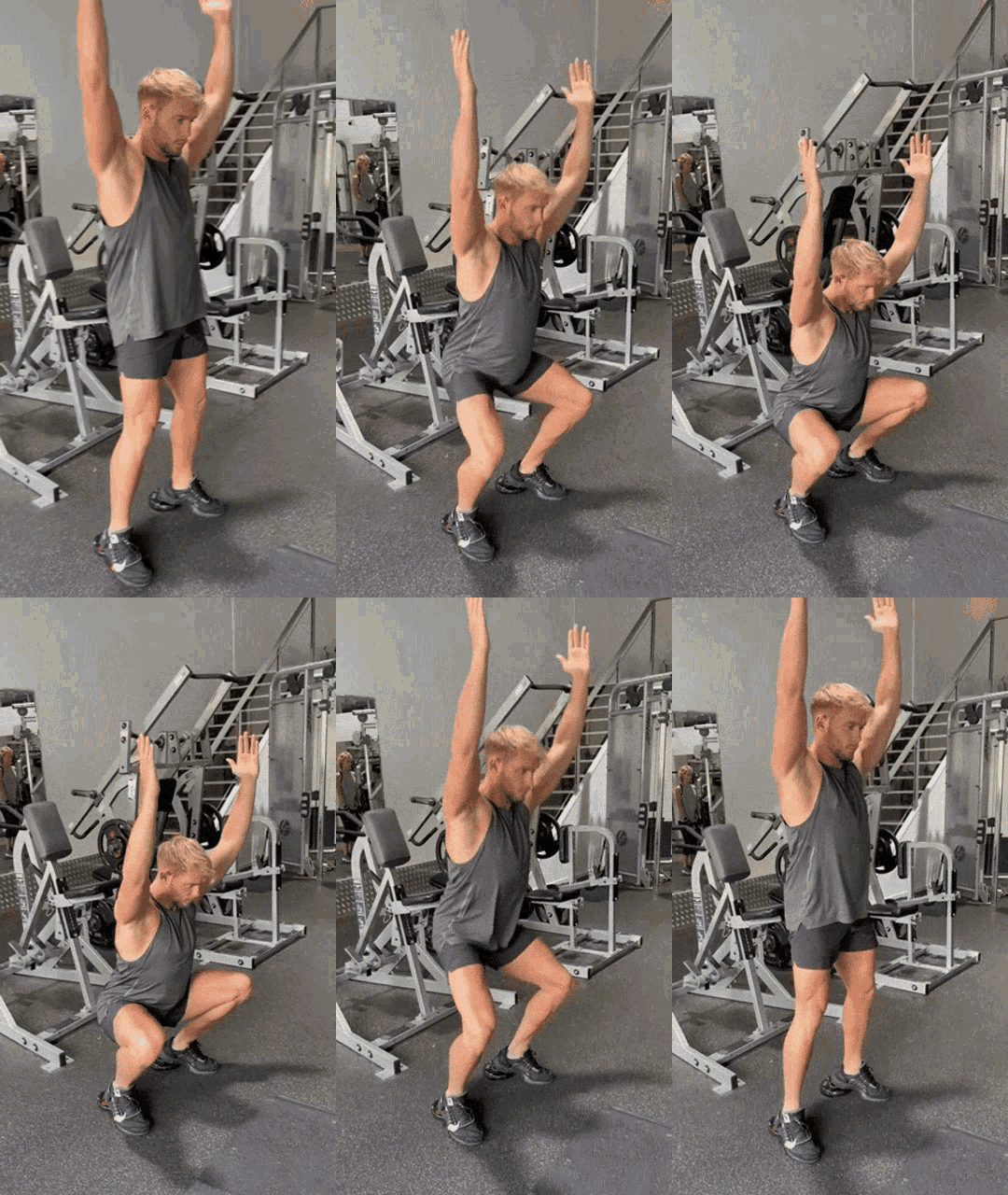
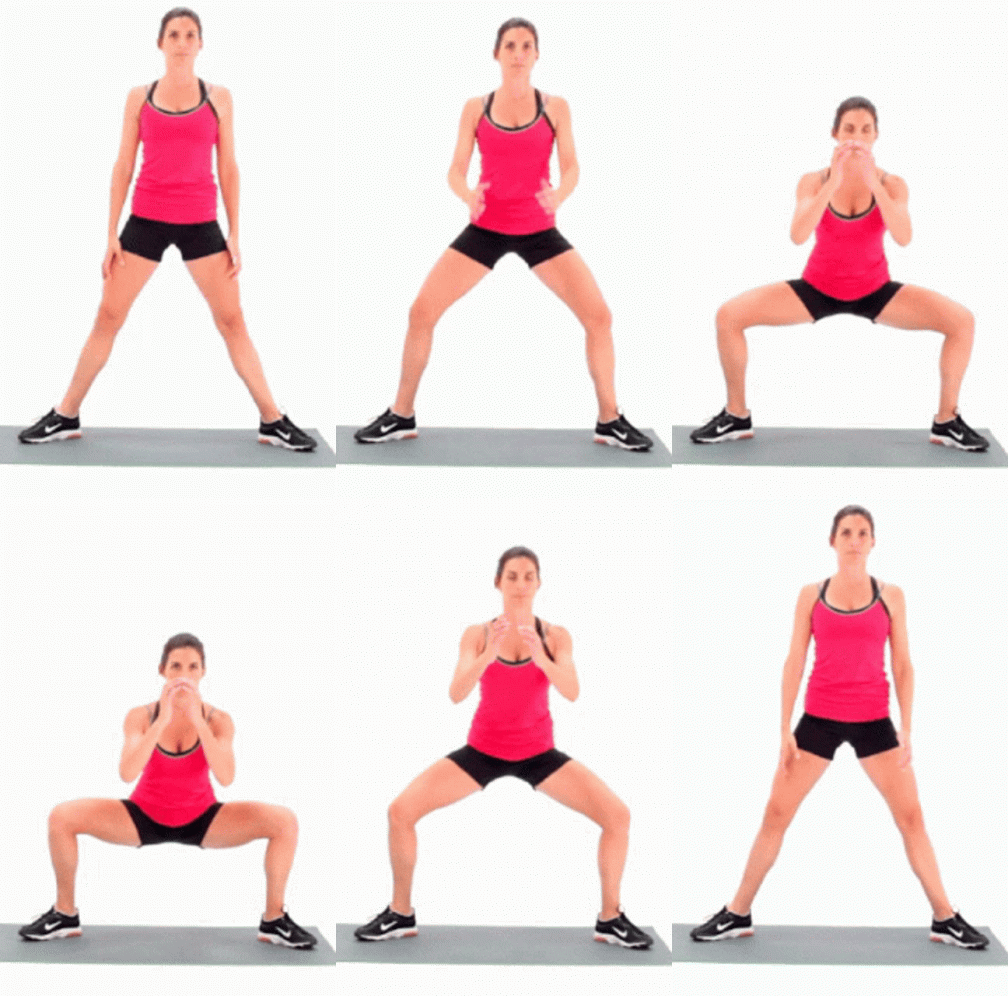
Squat Mastery: Full Body Workout.

Squat Mastery: Building Strength and Power (Full Body Workout).

💪🏋️‍♀️

Today's post is about squat mastery 🛑 💥 In this comprehensive guide, we'll dive deep into the art of squatting, exploring the muscles involved, effective implementation strategies, and essential tips for maximizing your gains. 🎯

**Muscles Engaged in Squatting**

🦵🍑
Squats are a compound exercise, targeting multiple muscle groups simultaneously. Here's a breakdown of the primary muscles involved:

* **Quadriceps:** The front of your thighs, responsible for extending your knee.

* **Hamstrings:** The back of your thighs, involved in flexing your knee.

* **Glutes:** Your buttocks, crucial for extending your hip.

* **Core:** Your abdominal and lower back muscles, providing stability throughout the movement.


**Implementation Strategies for Maximum Results With Squats**


1. **Proper Form:**

* **Foot Placement:** Position your feet slightly wider than your shoulders, toes slightly outward.

* **Bar Placement:** Rest the barbell on your upper back, just below your neck.

* **Depth:** Squat until your thighs are parallel to the ground or lower.

* **Back:** Keep your back straight and avoid rounding your shoulders.

2. **Progressive Overload:**


* Gradually increase the weight you're lifting over time to challenge your muscles.

* Use a variety of rep ranges (e.g., 5-8 reps for strength, 10-12 reps for hypertrophy).

3. **Squat Variation is Key:**

* Incorporate different squat variations (e.g., back squats, front squats, goblet squats) to target different muscle fibers and prevent plateaus.

4. Use Accessory Exercises To Complement Squats


* Complement your squats with exercises that target specific muscle groups involved in the movement, such as leg extensions, leg curls, and calf raises.

5. **Squat Nutrition and Recovery:**

* Fuel your body with a balanced diet rich in protein, carbohydrates, and healthy fats.

* Prioritize adequate sleep and rest to allow your muscles to recover and grow.


6. Easy Squat Tutorial For Beginners


The Starting Position:

  • Feet: Stand with your feet shoulder-width apart. You can experiment with a slightly wider stance if it feels more comfortable, but shoulder-width is a good starting point. Your toes should point slightly outward (about 5-15 degrees).
  • Posture: Stand tall with your chest up, shoulders back and down, and core engaged (imagine you're about to be punched in the stomach - that's the feeling you want).
  • Arms: You can hold your arms straight out in front of you for balance, or place your hands on your hips.

2. The Descent (Going Down):

  • Hinge at the Hips: This is the most crucial part. Initiate the movement by pushing your hips back as if you're about to sit in a chair. Think "hips back, then knees bend." Avoid bending your knees first.
  • Knee Movement: As your hips move back, your knees will begin to bend. Keep your knees tracking in line with your toes. Don't let them cave inwards (valgus collapse).
  • Depth: Aim to lower your hips until your thighs are parallel to the floor (or as close as you can comfortably get). This is a "parallel squat." If you can't reach parallel yet, that's okay! Go as low as you comfortably can while maintaining good form. As you get stronger, you'll be able to go deeper.
  • Weight Distribution: Keep your weight on your heels and mid-foot. You should be able to wiggle your toes. Don't let your weight shift forward onto your toes.
  • Back: Keep your back straight throughout the movement. Avoid rounding your back or arching it excessively. Imagine a straight line from your head to your tailbone.

3. The Ascent (Coming Up):

  • Drive Through Heels: Push through your heels to return to the starting position. Imagine pushing the floor away from you.
  • Engage Glutes: Squeeze your glutes (butt muscles) at the top of the movement to fully extend your hips.
  • Maintain Posture: Keep your chest up and core engaged as you stand up.

4. Breathing:

  • Inhale: Take a deep breath in as you lower into the squat.
  • Exhale: Exhale as you stand back up.

Key Tips for Beginners:

  • Start Slow: Focus on proper form over speed or weight.
  • Practice: Practice makes perfect! The more you squat, the better you'll get at it.
  • Use a Mirror: If possible, practice in front of a mirror to check your form.
  • Start with Bodyweight: Don't add weight until you've mastered the bodyweight squat.
  • Listen to Your Body: If you feel any pain, stop and rest. Don't push through pain.
  • Progression: Once you're comfortable with bodyweight squats, you can gradually add weight using dumbbells, kettlebells, or a barbell.

Troubleshooting:

  • Knee Pain: If you experience knee pain, it could be due to improper form, weak glutes, or tight hip flexors. Try adjusting your stance, strengthening your glutes, and stretching your hip flexors.
  • Rounding Back: This is a common mistake. Focus on keeping your chest up and core engaged. You can also try practicing with a dowel rod across your back to help maintain a straight back.
  • Falling Forward: This indicates that your weight is shifting forward onto your toes. Focus on keeping your weight on your heels.

This tutorial should give you a good foundation for learning how to squat correctly. Remember to be patient with yourself and celebrate your progress along the way!

Friday, September 14, 2018

Unlock Peak Performance: Flexibility for Bodybuilders!

Unlock Peak Performance: Flexibility for Bodybuilders!

Meta Description:

Discover essential strategies for bodybuilders to maintain flexibility while building muscle. Learn how strength training and stretching can work together for a powerful, injury-free physique.


Introduction to unlocking peak performance and flexibility in bodybuilding


Developing a powerful, sculpted physique is incredibly rewarding. While the focus in bodybuilding often shifts to muscle gain, strength training, and hitting those personal bests with heavy lifts, there's a crucial element often overlooked: flexibility. Many think building big muscles means sacrificing range of motion, but that couldn't be further from the truth. In fact, maintaining good flexibility is key to preventing injuries, improving your workout routine, and ultimately, boosting your muscle growth.

Let's dive into how you can keep your body agile and mobile, even as you pack on serious muscle mass.


The Core of Muscle Building: Compound Lifts and Flexibility

If you're serious about building muscle, you already know the importance of compound exercises. Movements like deadlifts, squats, and bench presses are the bedrock of any solid bodybuilding program. They engage multiple muscle groups simultaneously, leading to significant increases in strength and overall muscle mass.

However, executing these strength training staples with proper form—and maximizing their benefits—demands good flexibility. Without adequate range of motion, you risk compromising your form, which not only limits your muscle gain but also significantly increases your risk of injury. For instance, a deep squat requires flexible hips, ankles, and hamstrings.


Fueling Your Gains: Nutrition for Muscle Growth and Recovery

While the immediate focus of this post is flexibility, it's impossible to discuss muscle building without touching on nutrition. Your muscles need fuel to grow and recover, and that includes the repair processes that maintain flexibility.

To support your muscle gain goals, aim to consume ample calories. A general guideline for putting on about a pound of muscle per week is to add around 3500 calories to your weekly intake. This means consistently eating more throughout the day. Track your progress, and if you're not seeing changes after a couple of weeks, consider increasing your caloric intake further.

Protein intake is especially critical for muscle mass. Muscles are essentially made of protein, so a consistent supply is vital for repair and growth. Aim for roughly 1 gram of lean protein per pound of body weight daily. Distribute your protein intake across at least two meals and one snack to optimize absorption and fuel continuous muscle repair. Think lean meats, poultry, fish, eggs, and plant-based protein sources.


Strategic Stretching for Bodybuilders: More Than Just Warm-ups

Integrating strategic stretching into your workout routine isn't just about avoiding injury; it's about optimizing your performance and muscle development.

Here's how to approach it:

  • Dynamic Stretching Before Workouts: Before you hit the weights, perform dynamic stretches. These are controlled movements that take your joints through their full range of motion, preparing your muscles for the work ahead. Examples include leg swings, arm circles, torso twists, and walking lunges. This helps improve blood flow and warms up your muscle groups.

  • Static Stretching Post-Workouts: After your strength training session, when your muscles are warm, is the ideal time for static stretches. Hold each stretch for 20-30 seconds, focusing on the muscle groups you've just worked. This can help improve long-term flexibility and reduce muscle soreness. Don't push to the point of pain; aim for a gentle pull.

  • Dedicated Flexibility Sessions: Consider dedicating a separate 15-20 minute session 2-3 times a week specifically to flexibility work. This could involve foam rolling, yoga, or more in-depth stretching routines that target areas commonly tight in bodybuilders, such as hips, hamstrings, chest, and lats.


Integrating Flexibility into Your Bodybuilding Lifestyle

Maintaining flexibility while building muscle is an ongoing process. It's not a one-time fix but an integral part of your bodybuilding journey.

  • Listen to Your Body: Pay attention to areas of tightness or limited range of motion. These are often the areas that need the most attention.

  • Consistency is Key: Just like with your strength training, consistency in stretching will yield the best results. A little bit often is more effective than sporadic, intense sessions.

  • Seek Knowledge: Research different stretching techniques and bodybuilding tips for maintaining mobility. There are numerous resources available online and from certified trainers that can guide you.


Build Big, Move Better!

By prioritizing flexibility alongside your intense strength training, you're not just building muscle; you're building a more resilient, functional, and powerful physique. This approach will not only help you prevent injuries and improve your workout routine but also enhance your overall athletic performance and quality of life. Embrace flexibility, and unlock your full potential in bodybuilding!


RELATED POSTS