
Science‑Backed Bodybuilding Workouts for the Gluteus Maximus
Meta Description
Discover science‑backed bodybuilding workouts for the gluteus maximus. Learn its anatomy, function, top hypertrophy exercises, practical training tips, transformation timelines, and FAQs—written for beginners and intermediates.
Introduction: The Gluteus Maximus: Big, Bold Powerhouse Behind Your Lower Body
If you’ve ever wished your lower body looked and performed better—you’ve already met the gluteus maximus. It’s the largest muscle in your body, the engine behind explosive athletic movement, and one of the most responsive muscles to bodybuilding-style training. When trained correctly, the glutes grow fast, shapes beautifully, and dramatically improves strength and posture.
Let’s explore how to train the gluteus maximus using science-backed bodybuilding principles that anyone can understand and apply.
Where Is the Gluteus Maximus Located?
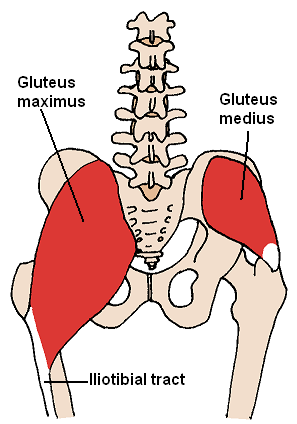
The gluteus maximus sits at the back of your hips, forming the bulk of your buttocks. It originates from the pelvis and sacrum and inserts into the femur and iliotibial band. Because of its size and leverage, the gluteus maximus is responsible for powerful hip extension—think standing up, jumping, sprinting, and lifting heavy weights.
Gluteus Maximus Anatomy, Function & Movement
Understanding the gluteus maximus helps you train it smarter—not harder.
🧠 Anatomy Overview
Origin: Ilium, sacrum, coccyx
Insertion: Gluteal tuberosity of the femur, iliotibial band
Fiber Orientation: Diagonal, allowing both power and stability
🏃 Primary Functions
Hip extension (standing up from a squat, deadlifting)
External rotation (turning your leg outward)
Abduction (moving your leg sideways)
Pelvic stability (keeping your hips level during walking and running)
🔥 Movements That Activate the Glute Max
Hip thrusts
Deadlifts
Squats
Lunges
Step-ups
Glute bridges

Gluteus Maximus Research Findings
RDLs and deep squats stimulate stretch-mediated hypertrophy, a powerful growth mechanism (Maas & Sandercock, 2010).
Gluteus Maximus Training Goals & Expected Transformations
⭐ Strength Goals
⭐ Aesthetic Goals
⭐ Transformation Timeline
Practical Gluteus Maximus Workout Advice for Everyday Lifters
✔ Train 2–3 Times Per Week
Glutes respond well to frequency. Alternate between heavy and moderate days.
✔ Use Progressive Overload
Increase weight, reps, or tempo every 1–2 weeks.
✔ Combine Stretch + Squeeze Movements
RDLs (stretch) + hip thrusts (squeeze) = optimal hypertrophy.
✔ Don’t Neglect Nutrition
Aim for:
1.6–2.2 g protein/kg bodyweight
Slight caloric surplus for muscle gain
✔ Track Your Workouts
Consistency beats intensity.
Two Science‑Backed Bodybuilding Exercises for Maximum Glute Growth
Romanian Deadlift (RDL) for the Gluteus Maximus
The RDL emphasizes the stretch-mediated hypertrophy that research shows is extremely effective for muscle growth.
Why the Romanian Deadlift Works:
Deep stretch on the glute max
High mechanical tension
Strong posterior chain recruitment.
How to Perform the Romanian Deadlift
Stand tall holding a barbell.
Hinge at the hips while keeping a slight knee bend.
Lower the bar until you feel a deep stretch.
Drive your hips forward to stand tall.
Bodybuilding Prescription:
3–4 sets × 6–10 reps
Slow eccentric (3 seconds)
Keep spine neutral
How often should I train my glutes?
Two to three times per week is ideal for most people.
Do I need heavy weights to grow my glutes?
Not always. Moderate weights with slow tempo and high tension also build muscle.
Can beginners grow glutes quickly?
Yes—glutes respond fast, especially in the first 8–12 weeks.
Are hip thrusts better than squats for glutes?
Hip thrusts activate the glutes more, but squats are still excellent for overall lower-body development.
Should I train glutes if I have lower-back pain?
Often yes, but start light and prioritize form. Consult a professional if pain persists.
References
Contreras, B., Cronin, J., Schoenfeld, B., Nates, R., & Sonmez, G. (2015). Are hip thrusts the best glute exercise? Journal of Applied Biomechanics. https://doi.org/10.1123/jab.2014-0301 (doi.org in Bing)
Maas, H., & Sandercock, T. G. (2010). Stretch-induced muscle hypertrophy and the role of passive tension. Journal of Applied Physiology. https://doi.org/10.1152/japplphysiol.00141.2010 (doi.org in Bing)
Schoenfeld, B. J. (2010). The mechanisms of muscle hypertrophy and their application to resistance training. Journal of Strength and Conditioning Research. https://doi.org/10.1519/JSC.0b013e3181e840f3 (doi.org in Bing)
Schoenfeld, B. J., Ogborn, D., & Krieger, J. (2016). Effects of resistance training frequency on muscular adaptations. Sports Medicine. https://doi.org/10.1007/s40279-016-0543-8 (doi.org in Bing)

No comments:
Post a Comment