
Science‑Backed Bodybuilding Workouts for Stronger Hamstrings
Meta Description:
Discover the science behind effective hamstring workouts! Learn where your hamstrings are, how they work, and follow two easy, step‑by‑step tutorials backed by research to build strength safely and efficiently.
🧠 Introduction: The Hidden Power Behind Every Step
Ever wondered what gives athletes that explosive sprint or bodybuilders those sculpted legs? The answer lies in the hamstrings — the unsung heroes of lower‑body strength. These powerhouse muscles stabilize your knees, propel your stride, and complete your leg aesthetics. Strengthening them isn’t just about looks; it’s about science, performance, and injury prevention.
Whether you’re chasing fitness goals or simply want to move better, understanding and training your hamstrings can transform your workouts and prevent# Science‑Backed Bodybuilding Workouts for the Hamstrings
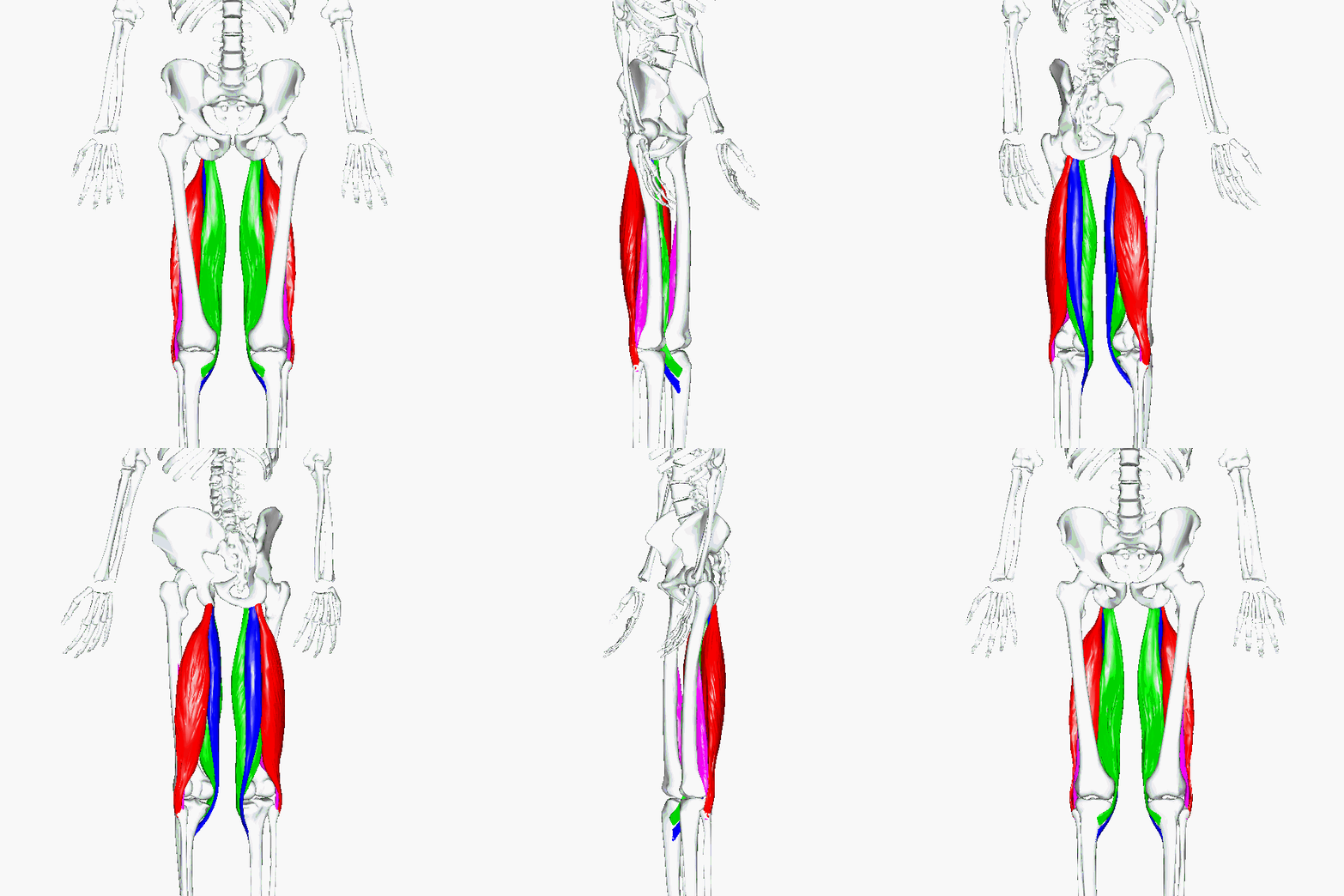
📍 Hamstring Location and Anatomy
Your hamstrings are a group of three muscles located at the back of your thigh, running from your hip bone (ischial tuberosity) down to your shin bone (tibia and fibula). They include:
Biceps femoris (outer hamstring)
Semitendinosus (middle)
Semimembranosus (inner)
Together, the hamstrings flex your knee and extend your hip — meaning they help you bend your leg and move your thigh backward. These actions are crucial for walking, running, and lifting.

⚙️ Hamstring Function and Importance
Hamstrings act as stabilizers and shock absorbers. They counterbalance the quadriceps (front thigh muscles) and protect your knees from strain. Weak hamstrings can lead to poor posture, slower sprint times, and even ACL injuries.
Science shows that eccentric training (lengthening under tension) builds stronger, more injury‑resistant fibers — making hamstring workouts essential for athletes and everyday movers alike.
💪 Two Easy Hamstring Workout Tutorials (Science‑Backed)
1️⃣ Hamstring leg curl
Why the Hamstring Leg Curl Works:
Hamstring Leg Curl Step‑by‑Step Guide:
Sit or lie on the machine with your legs straight.
Hook your heels under the pad or band.
Slowly curl your legs toward your glutes while exhaling.
Hold for one second, then return slowly.
Perform 3 sets of 12–15 reps.
Hamstring Leg Curl Science Insight:
Eccentric control during the lowering phase increases muscle fiber recruitment and reduces injury risk.
2️⃣ Romanian Deadlift (RDL) for the Hamstrings
Why the Romanian Deadlift for the Hamstrings Works:
The RDL emphasizes hip extension — the hamstrings’ second major function. It strengthens both the hamstrings and glutes through controlled stretching.
Romanian Deadlift Step‑by‑Step Guide:
Stand with feet hip‑width apart, holding a barbell or dumbbells.
Keep your back straight and knees slightly bent.
Hinge at the hips, lowering the weights until you feel tension in your hamstrings.
Return to standing by driving your hips forward.
Perform 3 sets of 10–12 reps.
Romanian Deadlift Science Insight:
Research confirms that hip‑dominant exercises like RDLs improve posterior chain strength and enhance sprint performance.
🔬 The Science Behind Hamstring Training
Eccentric loading increases muscle fiber length and strength.
Neuromuscular adaptation improves coordination between hamstrings and glutes.
Balanced training reduces knee strain and enhances athletic performance.
Progressive overload (gradually increasing resistance) ensures continuous growth.
🏋️ Practical Hamstring Training Advice for Beginners
Warm up with light cardio and dynamic stretches.
Focus on form — not just weight.
Rest 48 hours between hamstring sessions.
Pair hamstring work with quad exercises for balance.
Track progress with photos or strength logs.
🌟 Hamstring Workout Transformations You Can Expect
Consistent hamstring training leads to:
Better posture and balance
Enhanced sprint speed and jump power
Reduced risk of knee and lower‑back injuries
Aesthetic leg symmetry
❓ Hamstring Workout FAQ
Q1: How often should I train hamstrings? Twice a week is ideal for most people, allowing recovery and growth.
Q2: Can I train hamstrings without equipment? Yes! Bodyweight bridges and band curls are effective alternatives.
Q3: Why do my hamstrings feel tight? Tightness often results from weakness or poor mobility — regular stretching and strengthening help.
Q4: Are hamstring workouts safe for beginners? Absolutely. Start light, focus on technique, and progress gradually.
Q5: What’s the best time to train hamstrings? After a warm‑up or as part of your leg day routine — consistency matters more than timing.
🔗 References
American Council on Exercise. (2023). Understanding hamstring anatomy and function (acefitness.org in Bing).
Behm, D. G., & Chaouachi, A. (2011). Review of dynamic stretching and its effects on performance (doi.org in Bing). Journal of Strength and Conditioning Research.
Bourne, M. N., et al. (2017). Eccentric training and hamstring injury prevention (doi.org in Bing). British Journal of Sports Medicine.
McAllister, M. J., et al. (2014). Electromyographic analysis of hip thrust and glute bridge exercises (doi.org in Bing). Journal of Strength and Conditioning Research.
Schoenfeld, B. J. (2010). The mechanisms of muscle hypertrophy and their application to resistance training (doi.org in Bing). Journal of Strength and Conditioning Research.

No comments:
Post a Comment